Labyrinths
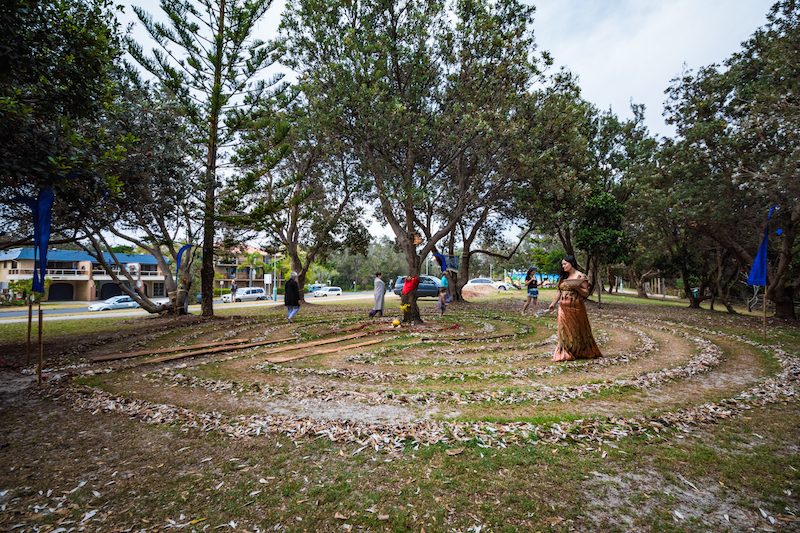
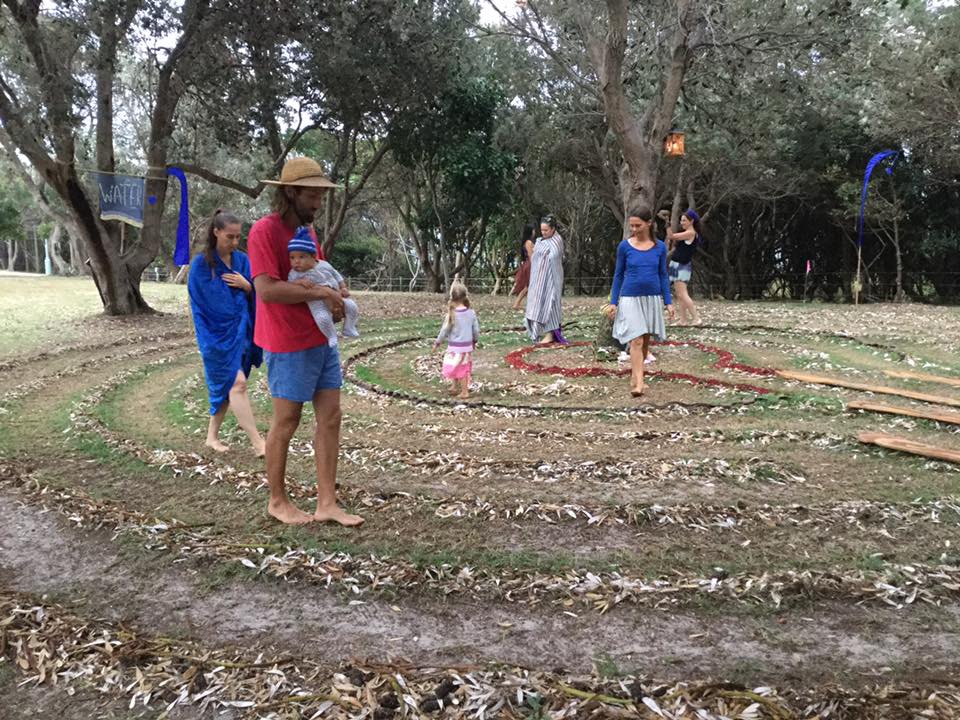
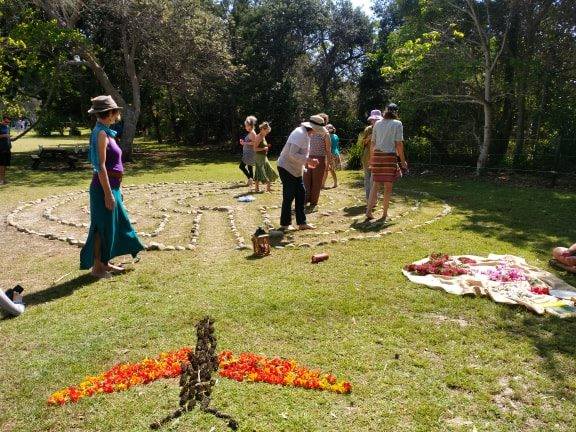
The latest labyrinth Jenni has made is an evolving living sculpture at Northey Street City Farm, near the corner of Northey and Victoria Streets, Windsor, Brisbane~Magandjin. NSCF is an urban demonstration permaculture farm, in the heart of the city. It has a Plant Nursery open 6 days a week until 12.30pm. Volunteers work there Tuesdays to Thursdays and a thriving Organic Market is held each Sunday morning in the large carpark.
Acknowledgement
Northey Street City Farm acknowledges that this land is Turbal and Jagera country and that the traditional custodians have always walked gently here, exercising cultural practices which reinforced their deep connection to Country. We pay our respects and gratitude for their custodianship
What is a Labyrinth?
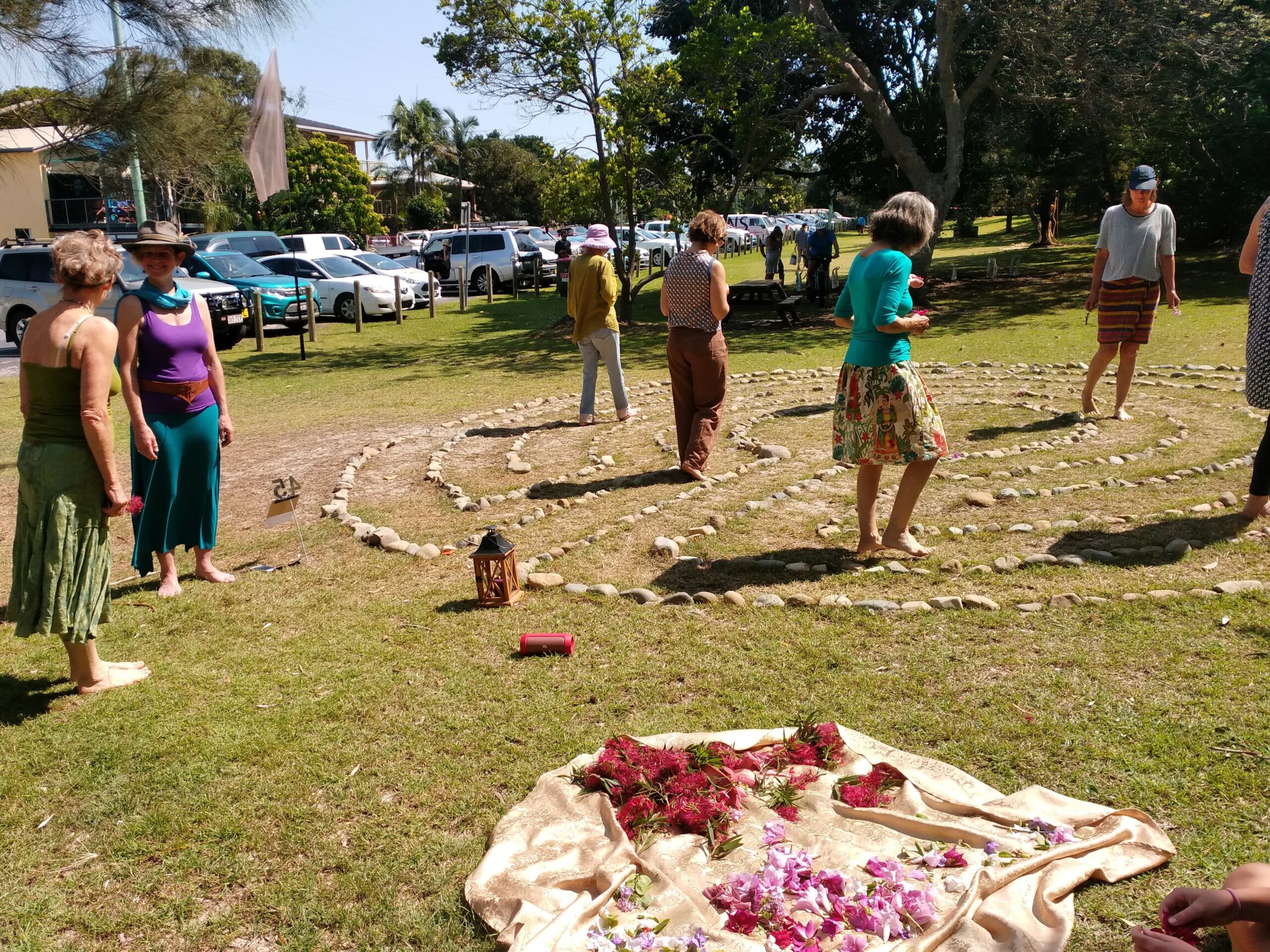
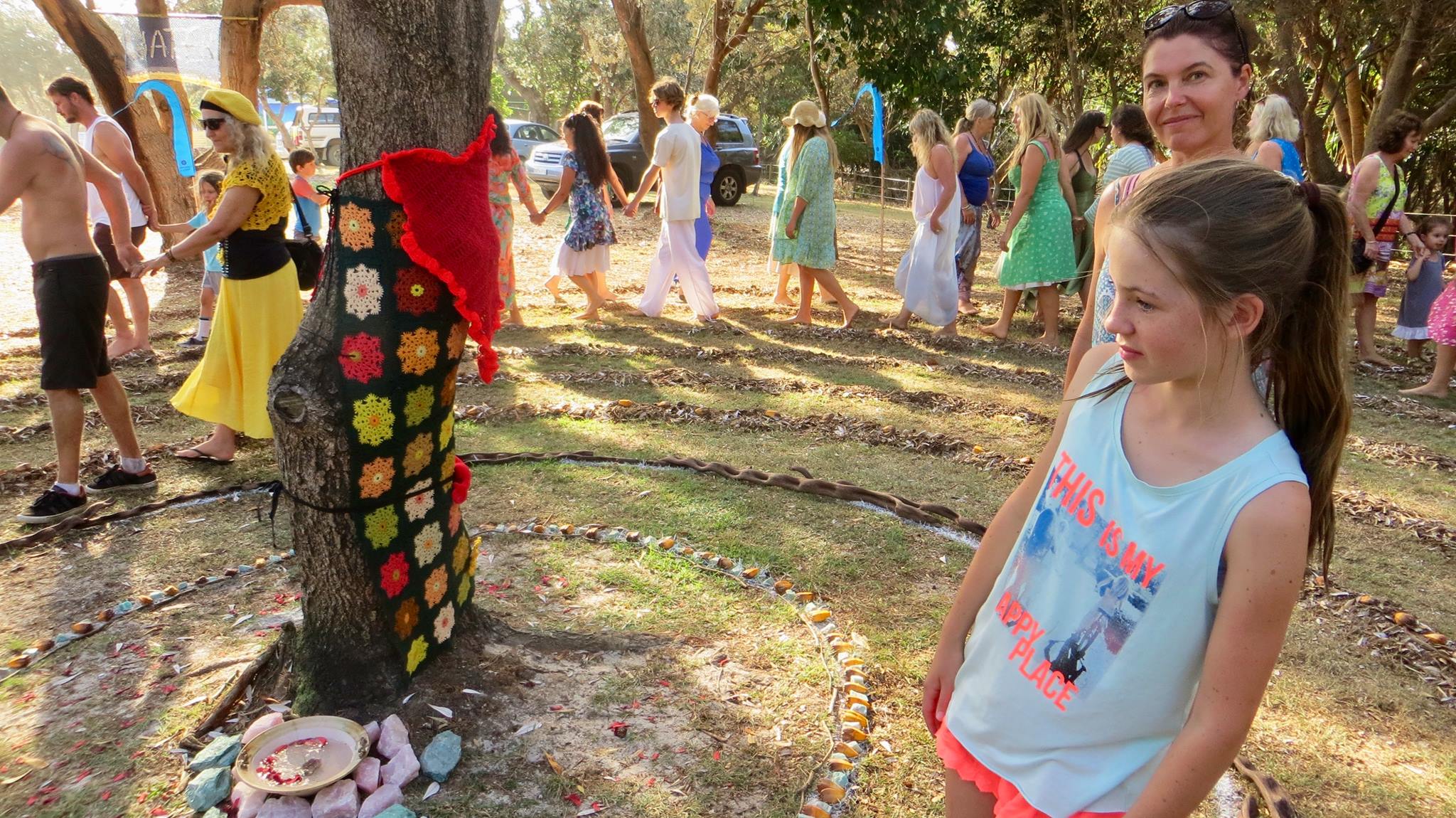
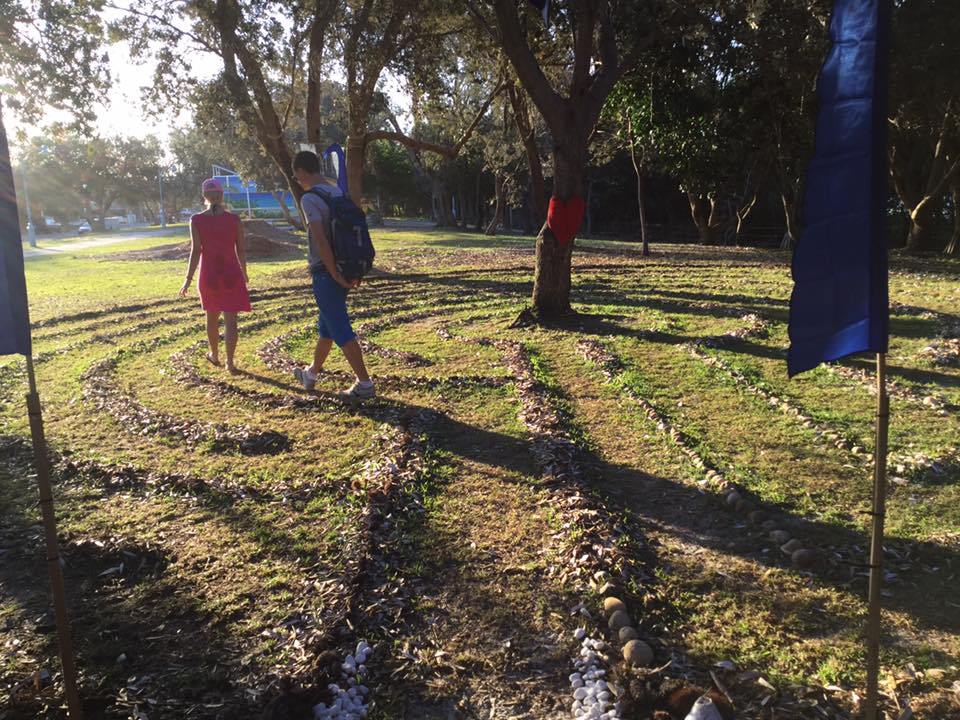
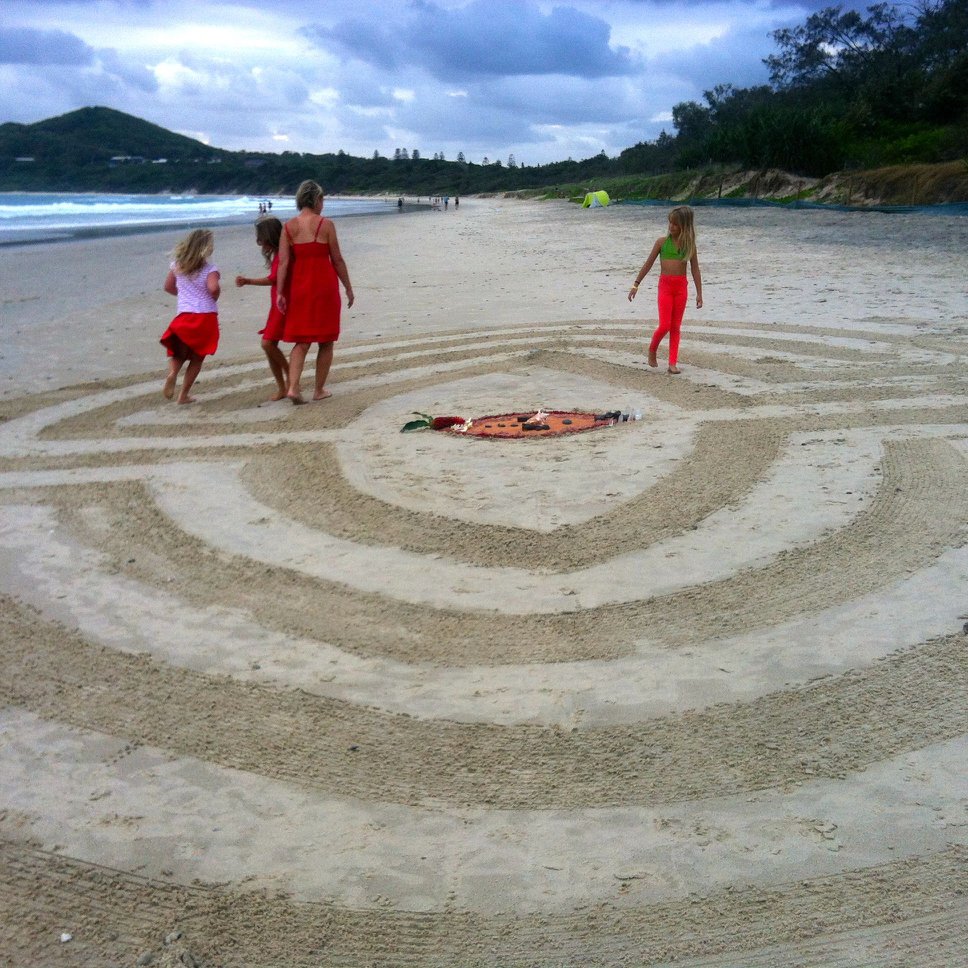
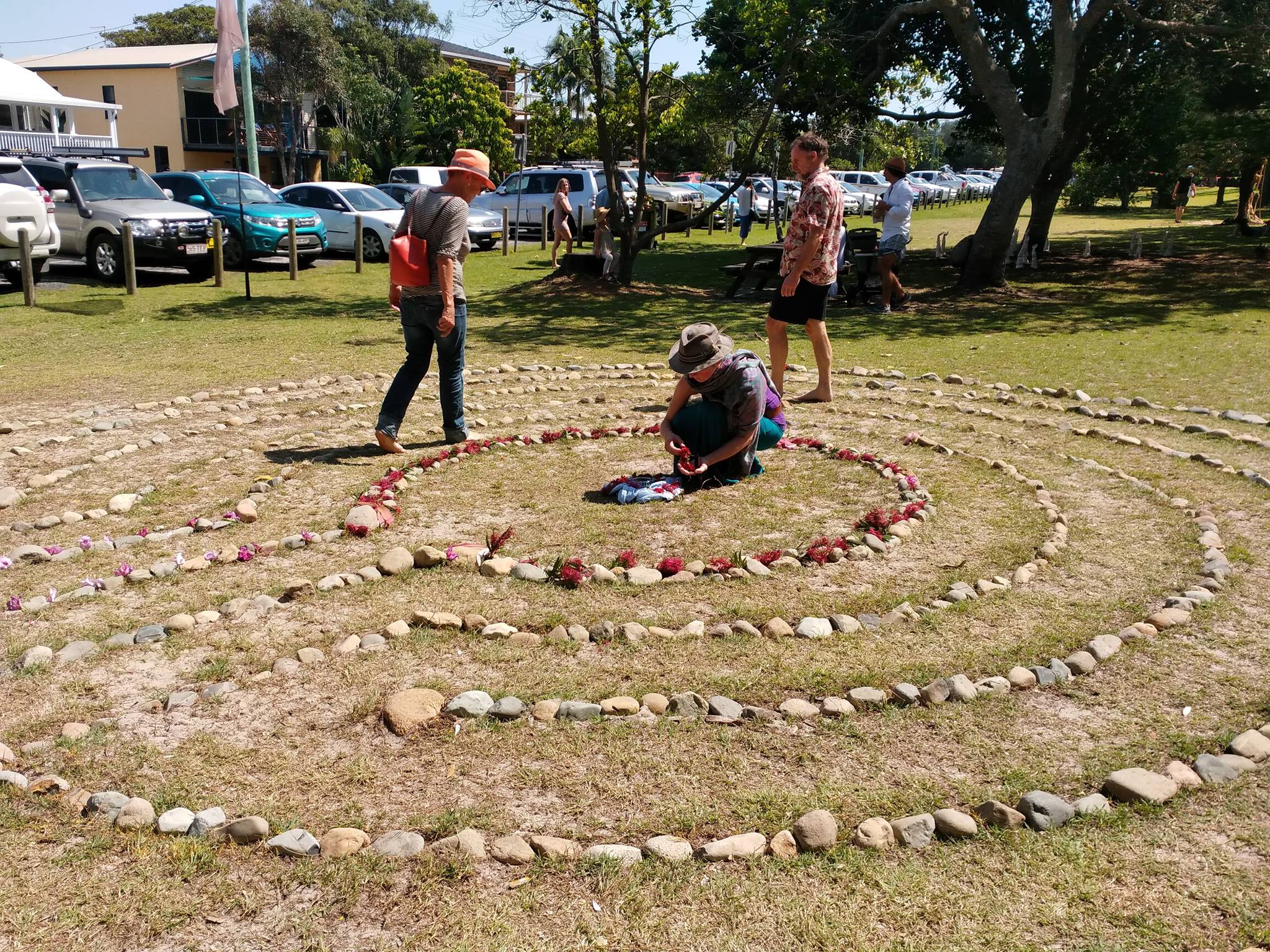
The labyrinth is a walking meditation, but it is not a maze. There are no tricks to it and no dead ends. It has only one path that leads from the outer edge in a winding way to the centre. The unpredictable pattern of the spiral can to help us let go our our chattering mind. Simply follow your feet quietly along the winding path, and you may find a quiet place within, even surrounded by the city sounds.
Benefits of a Labyrinth
Walking the Labyrinth can quiet the mind, open the heart and ground the body. Some find answers to questions long asked, some find healing, creativity, a sense of wholeness. What will you find on your labyrinth journey?
Guidelines for Walking the Labyrinth
There is no right way or wrong way to walk a labyrinth. Use the labyrinth in any way that you need to, while being respectful of others walking.
Generally there are three stages to the walk: releasing on the way in, receiving in the centre (where you may want to pause) and returning as you wind your back out of the labyrinth. You may choose to go directly to the centre to sit quietly – whatever meets your needs. To exit, it is customary to walk back along the winding path, as the entrance is also the exit. If others are walking at the same time and you need to pass, pause, turn sideways and carefully pass each other.
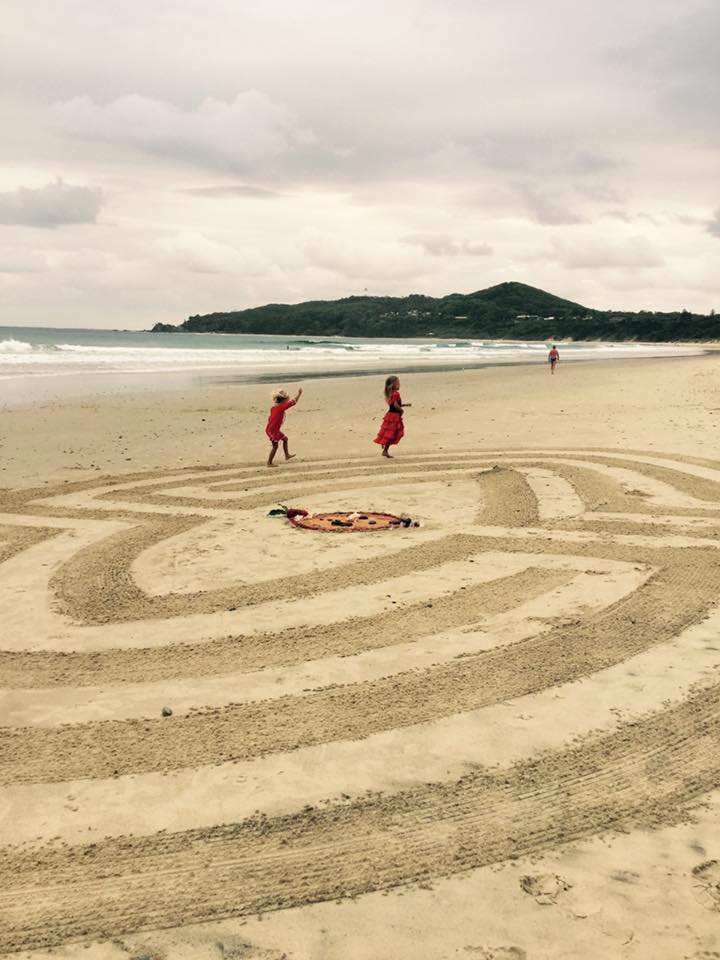
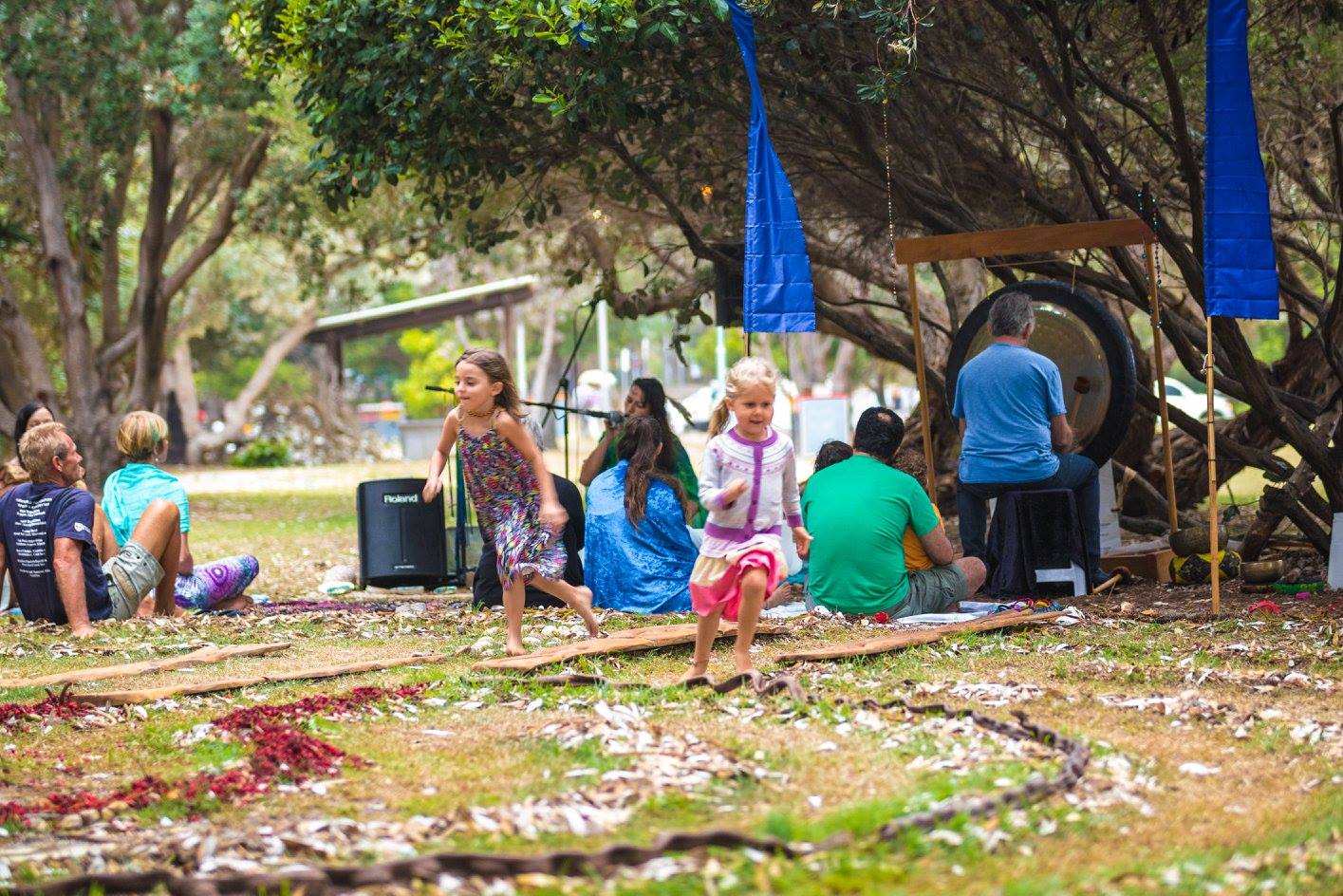
Children enjoy the labyrinth and often like to run it, which is fine. We do ask parents to supervise their young children, so all can enjoy the meditative aspects of the walk.
About our Labyrinth
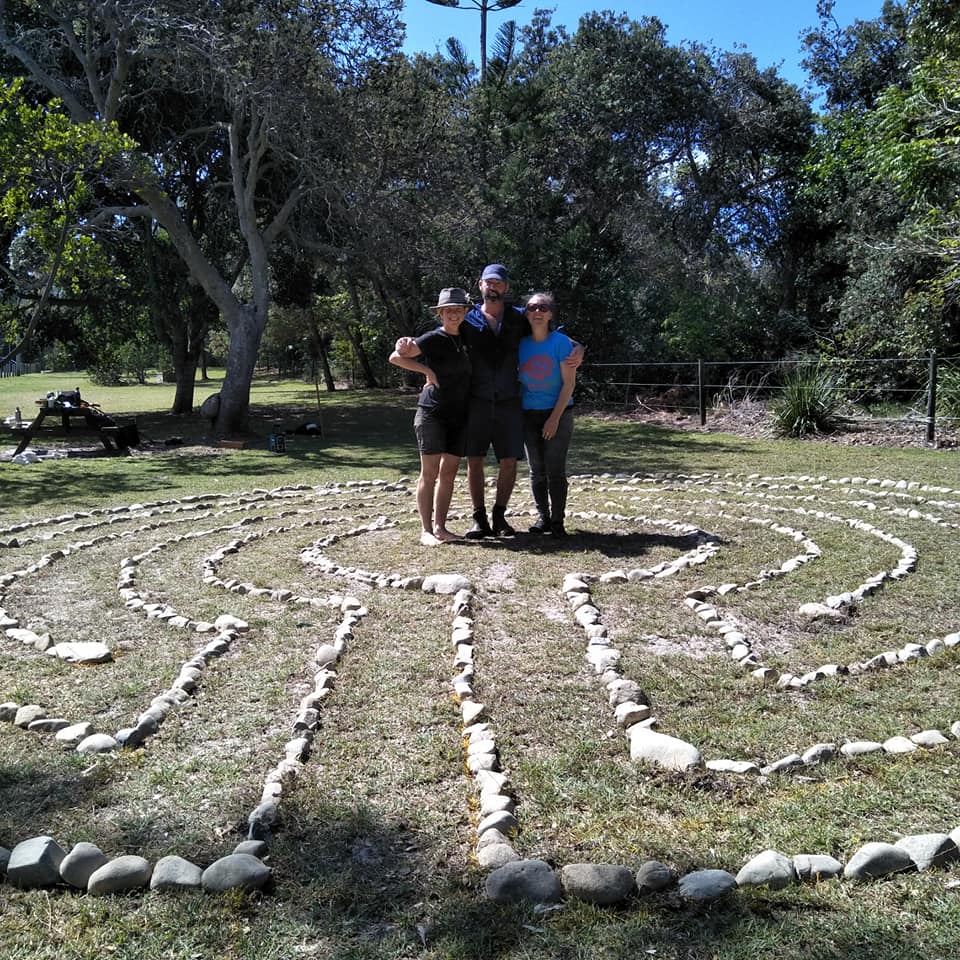
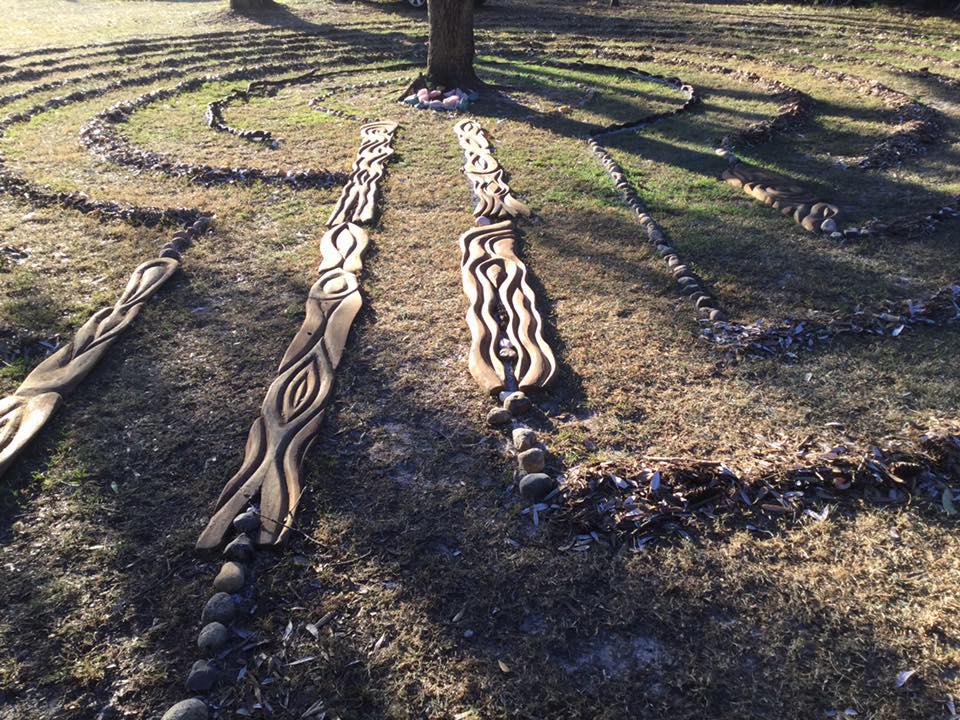
This labyrinth was designed by a member of our Northey Street City Farm community to be a living sculpture. As you walk the path, your feet help suppress the grass there, while the grass and weeds in the borders that define the path, grow taller. So your feet help the living sculpture rise up from the land and this ancient pattern emerges.
As we are a permaculture demonstration farm, we follow the Permaculture Ethics of Earth Care, People Care and Fair Share. Providing a public labyrinth is part of People Care and Fair Share. Walking a labyrinth can also help us connect to Earth Care, by connecting us to place. When we mindfully walk a labyrinth repeatedly, a deeper connection to place can unfold.
History of the Labyrinth
Various labyrinth patterns have been found in many continents as engravings since ancient times. Labyrinths built as
walking meditations appeared in Europe during the Middle Ages. It is said that when societies undergo major
transformations, labyrinths enjoy a resurgence. You can now find labyrinths worldwide.
To learn more
https://www.veriditas.org/
https://aln.org.au/find-a-labyrinth The Australian Labyrinth Network
https://labyrinthsociety.org/labyrinths-overview/
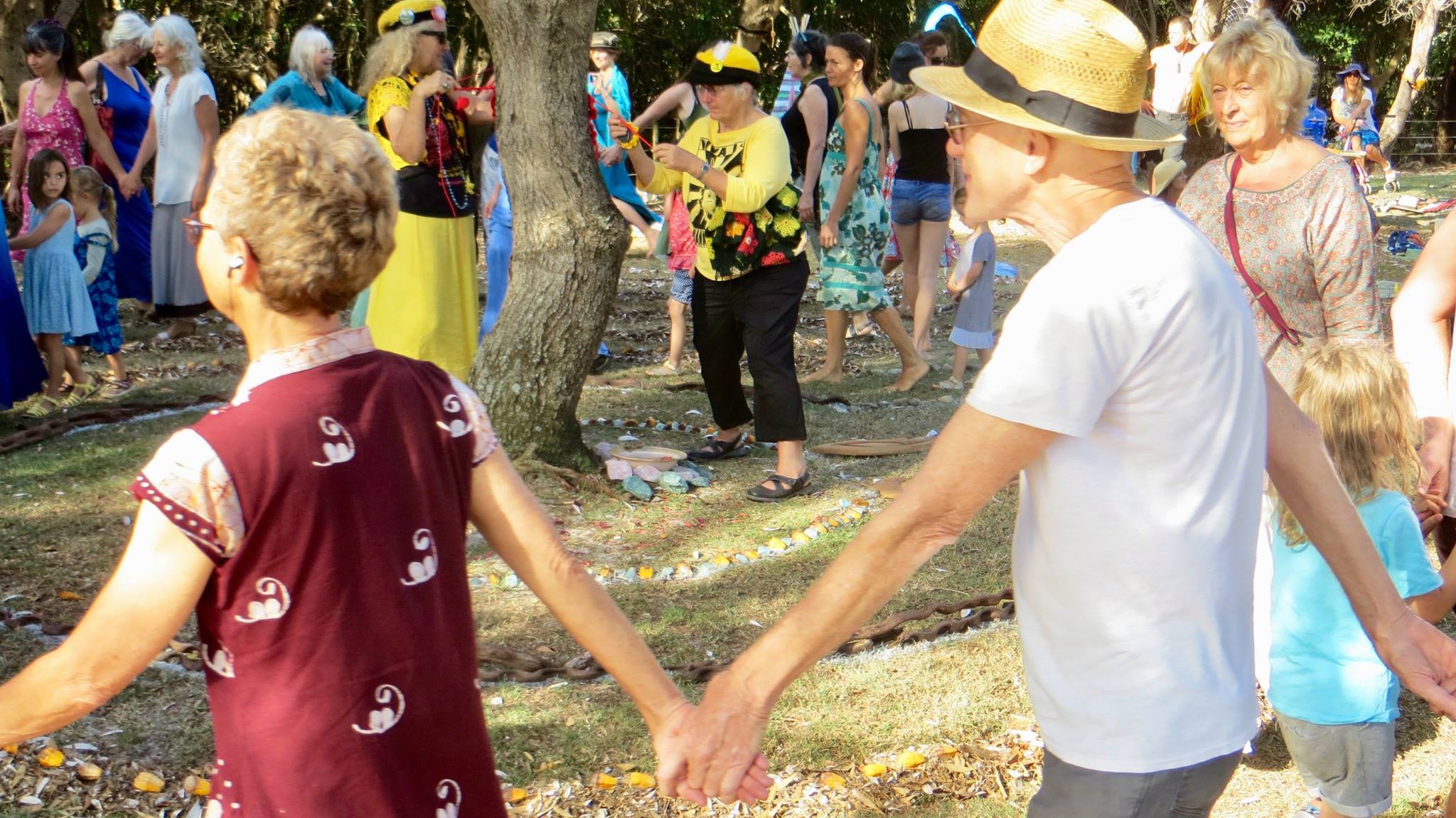
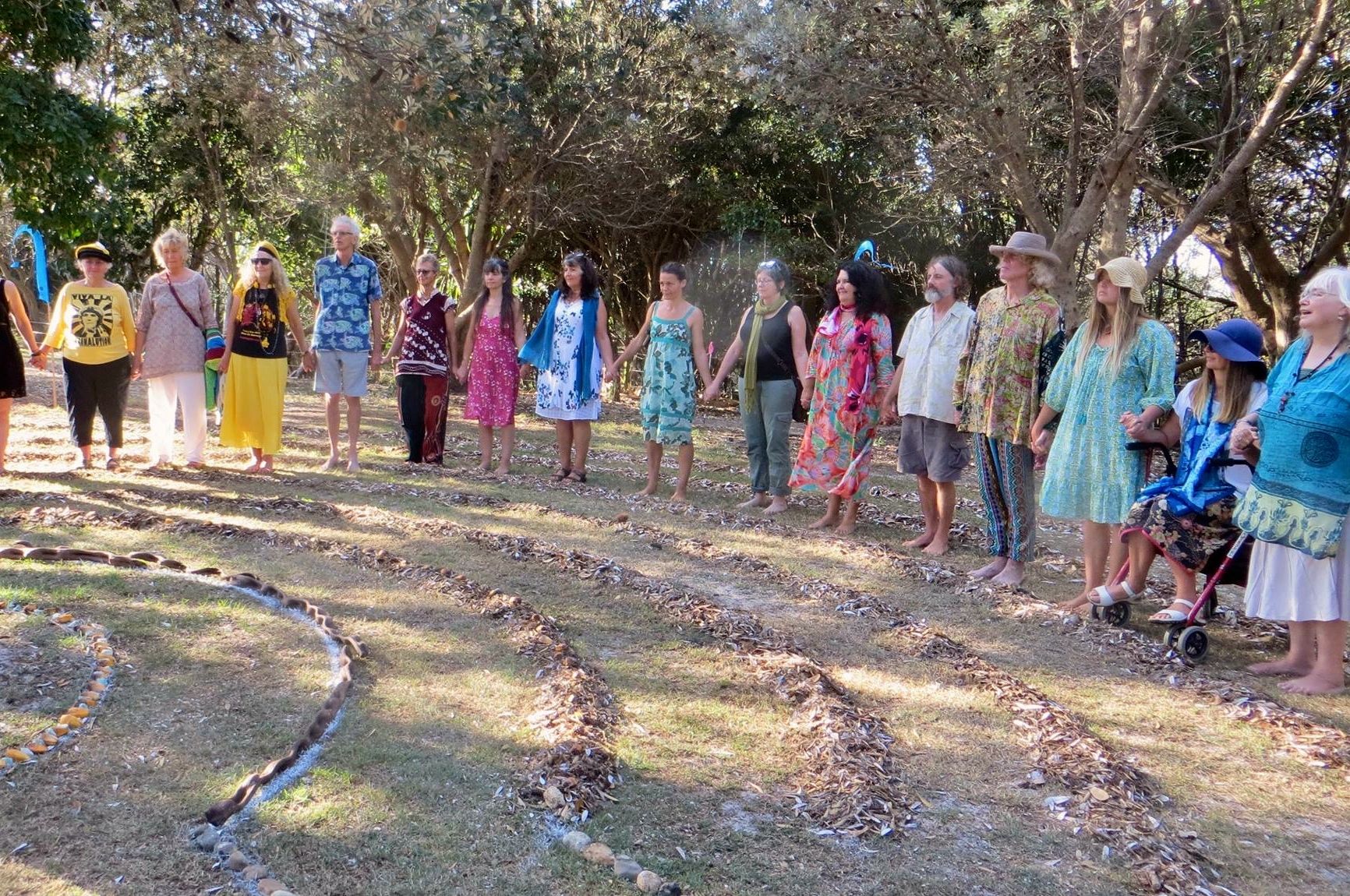
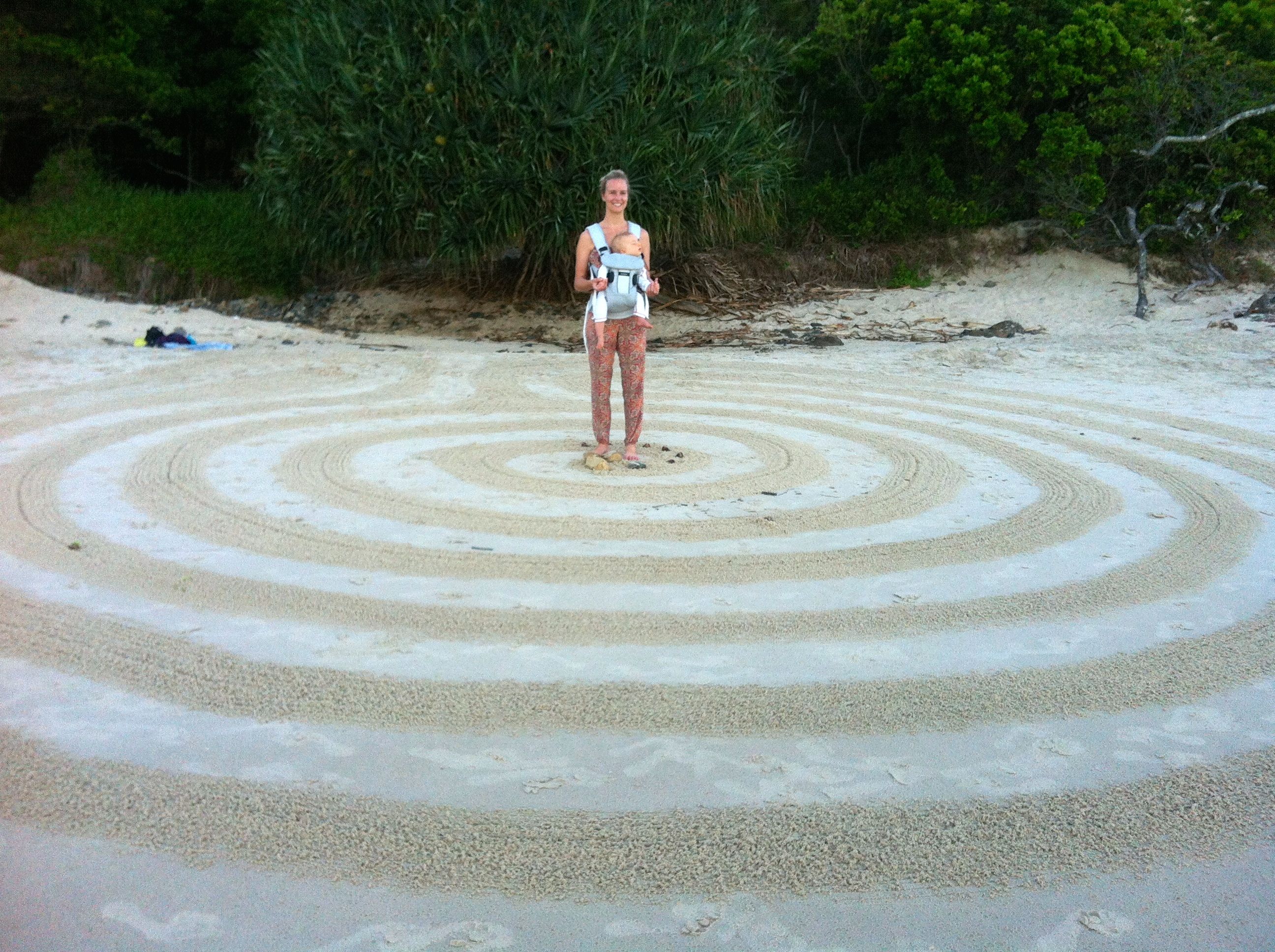
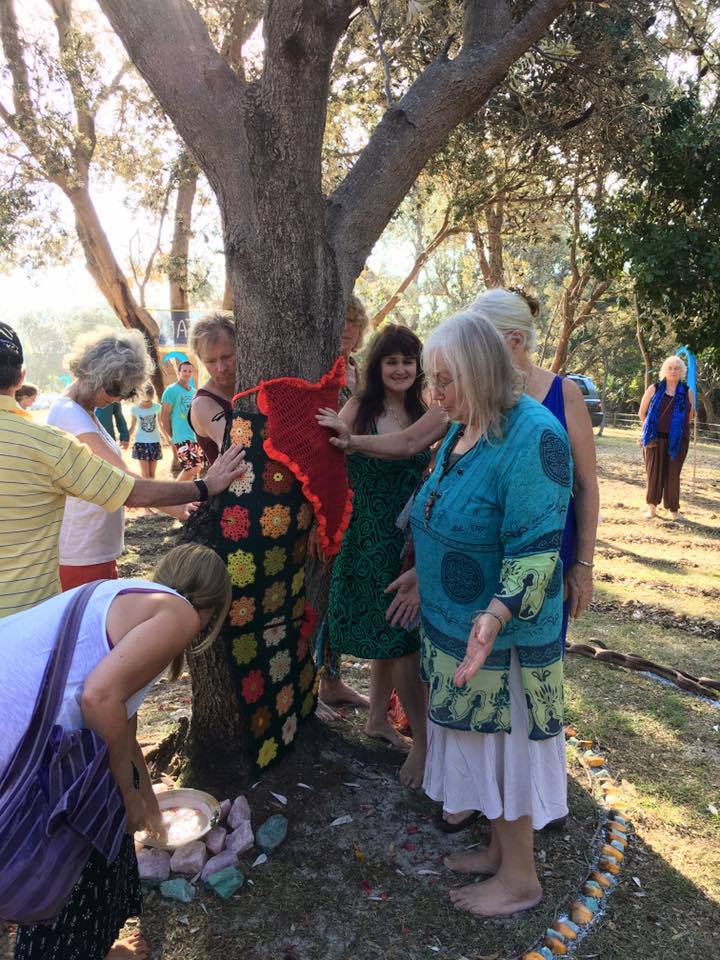
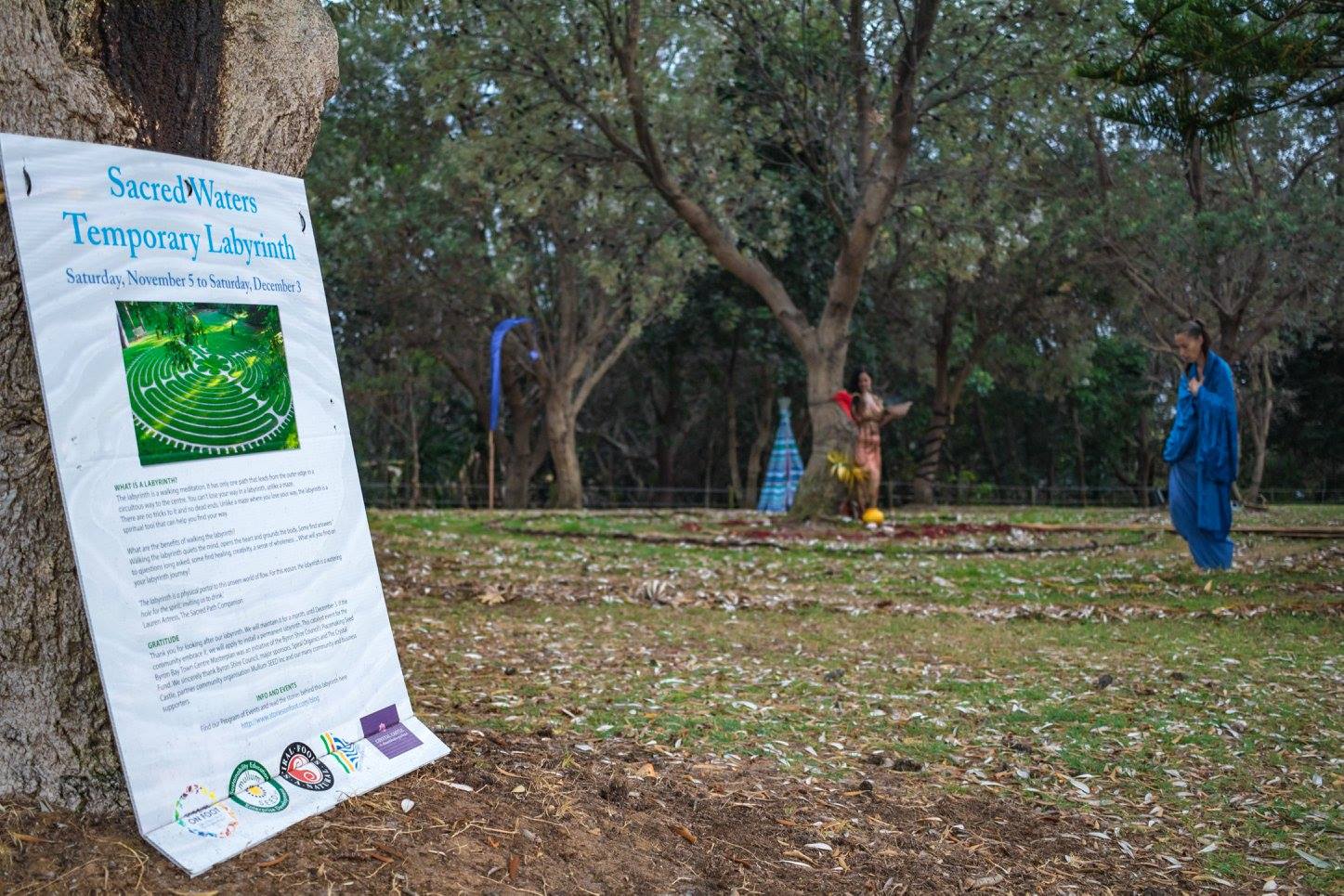
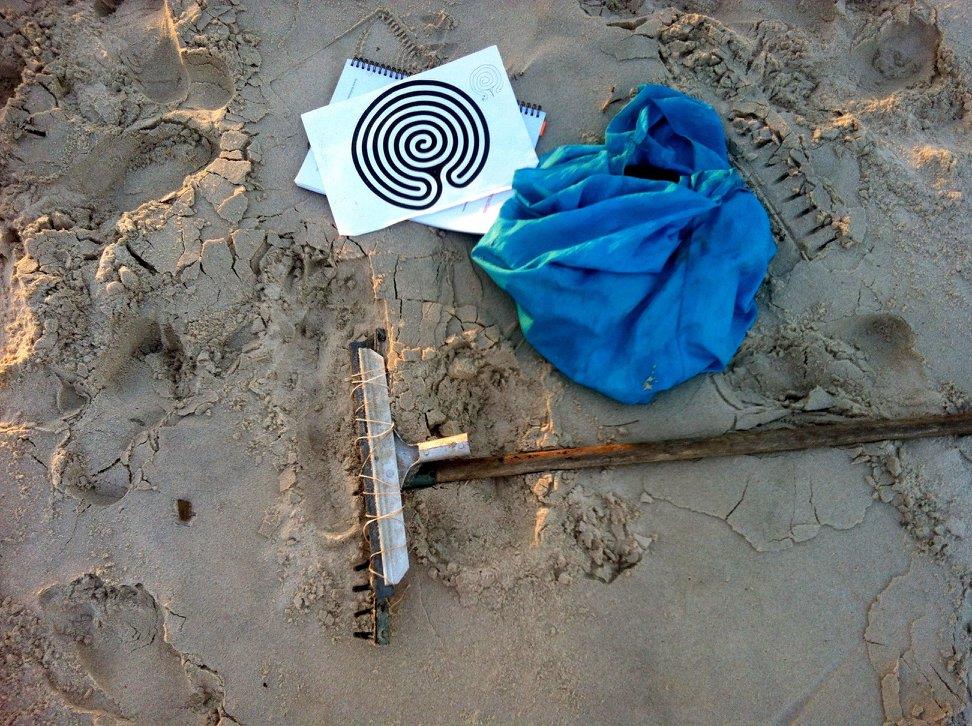
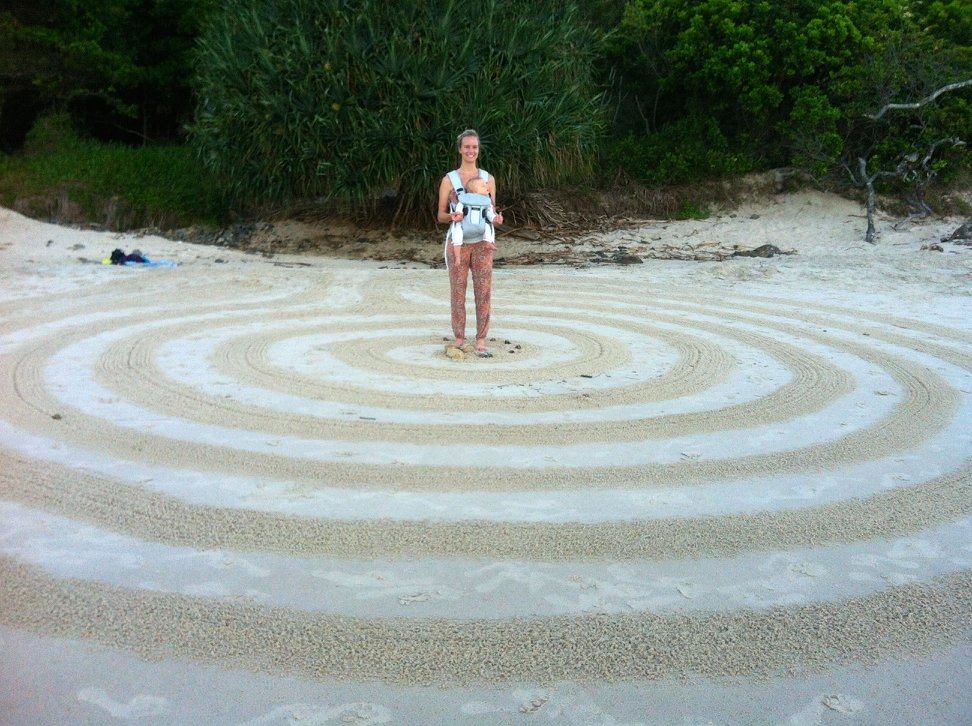
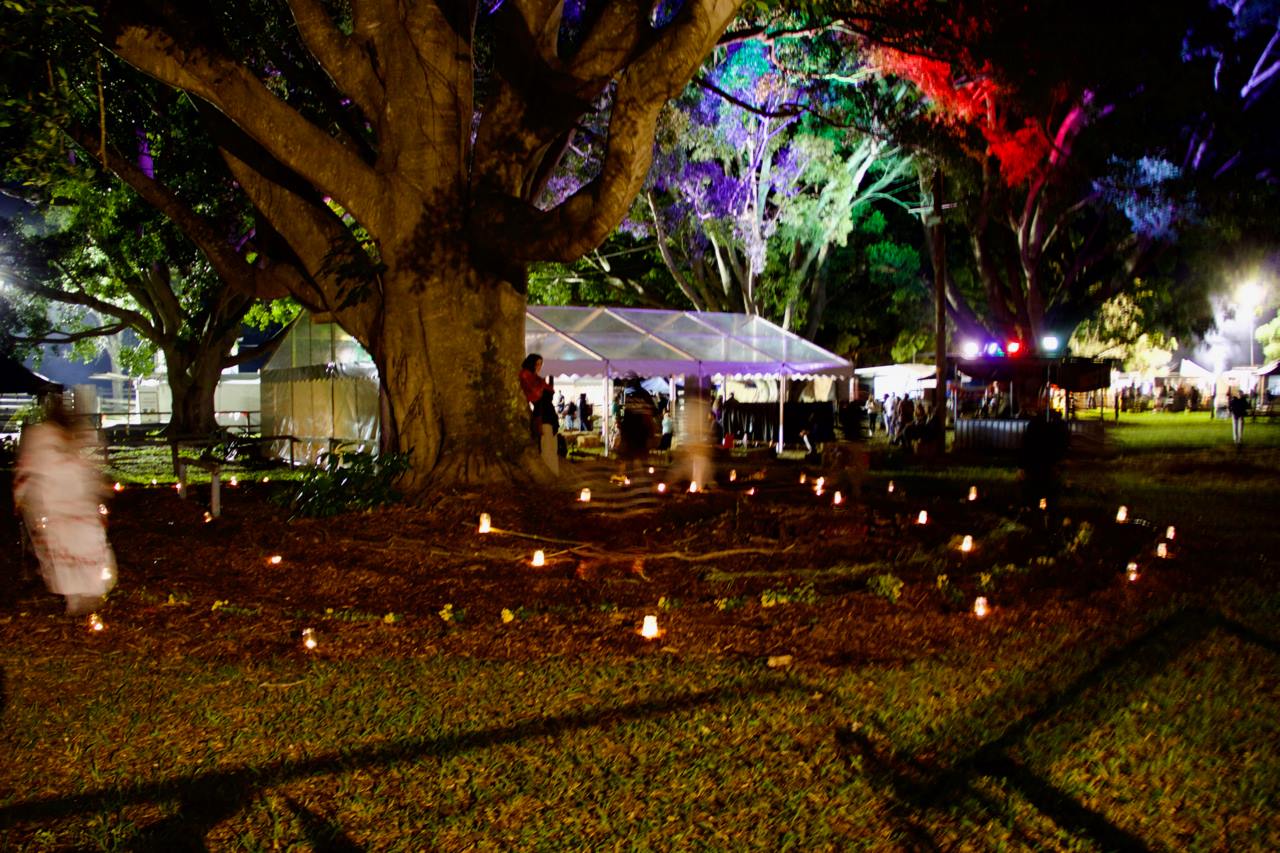
Jenni started creating labyrinths after training in Sydney in labyrinth facilitation with Lauren Artress, who founded Veriditas and labyrinth making with Lars Howlett. She began making ephemeral labyrinths with her good friend, community artist Jacquelina Wills in Byron Shire. Now based in Magandjin~Brisbane, Jenni works as an educator at Northey Street City Farm, where she has created an ephemeral labyrinth on the corner of Victoria and Northey Streets.
YOU TUBE: Watch a few of labyrinths made by Jenni and community artist, Jacquelina Wills in Byron Shire here.